First Coaching Session – €30 (one-time offer)



Stress can make you destroy things you actually care about
SELF-CARE & WELLBEING
Ioana Coman
5/6/20262 min read
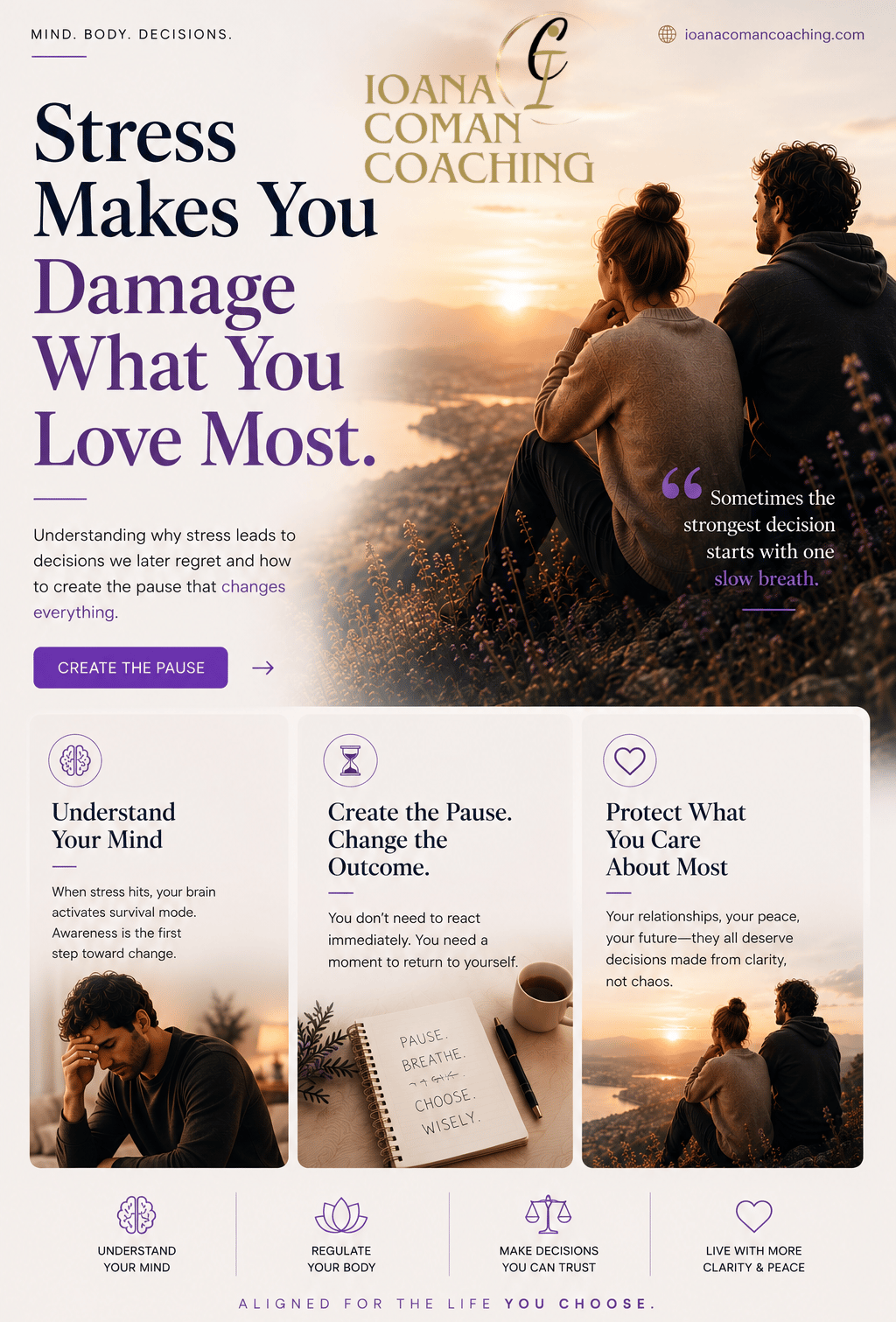
Your nervous system influences your decisions more than you realize
Most people believe they make bad decisions because they are too emotional, impulsive, dramatic, or weak. But in reality, many decisions are not made from clarity at all. They are made from nervous system activation.
When your nervous system becomes overwhelmed, your body changes the way your brain functions. Stress chemistry starts influencing your reactions, your perception of situations, and your ability to think long-term. In those moments, urgency feels real. It feels important. It feels like something must happen immediately.
But urgency is not always wisdom. This is why people often regret messages sent late at night, words spoken during arguments, impulsive breakups, emotional spending, or saying “yes” when they actually wanted to say “no.” Many reactions that later create regret are not coming from calm thinking. They are coming from a nervous system stuck in survival mode.
Why stress changes the way you think
When people feel emotionally threatened, the body activates survival responses like fight, flight, freeze, or fawn. Heart rate increases. Breathing becomes shallow. Muscles tense. Stress hormones flood the system. At the same time, the part of the brain responsible for rational thinking, perspective, emotional regulation, and impulse control becomes less active.
That is why stressed people often overreact, catastrophize, misinterpret intentions, or make permanent decisions based on temporary emotional states. The problem is not simply emotion itself. The problem is dysregulation.
And this is exactly why stress management and nervous system regulation are becoming some of the most important mental health topics today.
The mind and body are deeply connected
Most people try to “think” themselves out of stress while their body is still convinced there is danger. But the mind and body are deeply connected systems. You cannot force clarity while your nervous system still believes you are under threat.
This is why breathing techniques can work surprisingly fast. Not because they are magic, but because they directly influence physiology. When the body begins calming down, the brain receives signals that the danger is decreasing. And only then does clearer thinking begin returning.
One of the fastest techniques supported by neuroscience is called the physiological sigh. It involves taking one deep inhale through the nose, followed by a second shorter inhale, and then a slow exhale through the mouth. Repeating this several times can rapidly reduce stress and lower emotional activation.
Clarity returns when the nervous system calms down
Often, within just a few breaths, people notice less pressure, less emotional intensity, and more mental clarity. And sometimes that small pause completely changes a decision. Some of the most damaging choices in life happen during moments of emotional flooding: sending the text, escalating the argument, quitting impulsively, begging for connection, agreeing from guilt, or making fear-based decisions.
What feels absolutely true in a dysregulated state often feels very different once the nervous system calms down. This does not mean suppressing emotions or pretending not to care. It means creating enough internal steadiness to respond consciously instead of reacting automatically. Because decisions made from stability tend to age far better than decisions made from panic, fear, or emotional overwhelm.
Sometimes the strongest decision is the pause
Some of the biggest mistakes people make are not made from hatred. They are made from exhaustion, emotional overload, loneliness, stress, and survival mode.
Sometimes people do not destroy relationships because they stopped caring. They destroy them because stress disconnected them from the calm, grounded version of themselves.And the dangerous part is that in those moments, the reaction feels justified. It feels urgent. It feels true.
Until the nervous system calms down and regret arrives.Sometimes the most intelligent thing you can do is not react immediately. Sometimes the strongest decision starts with one slow breath.


Ioana Coman Coaching
Sessions available online. For inquiries or to book a session, contact me at: ioanacomancoaching@yahoo.com
Follow Ioana Coman Coaching on Instagram: @ioanacomancoaching https://www.instagram.com/ioanacomancoaching/
Ioana Coman Coaching — founded by Ioana Elena Coman