First Coaching Session – €30 (one-time offer)



Why healthy hair is important and how it influences attractiveness
SELF-CARE & WELLBEING
Ioana Coman
3/18/20268 min read
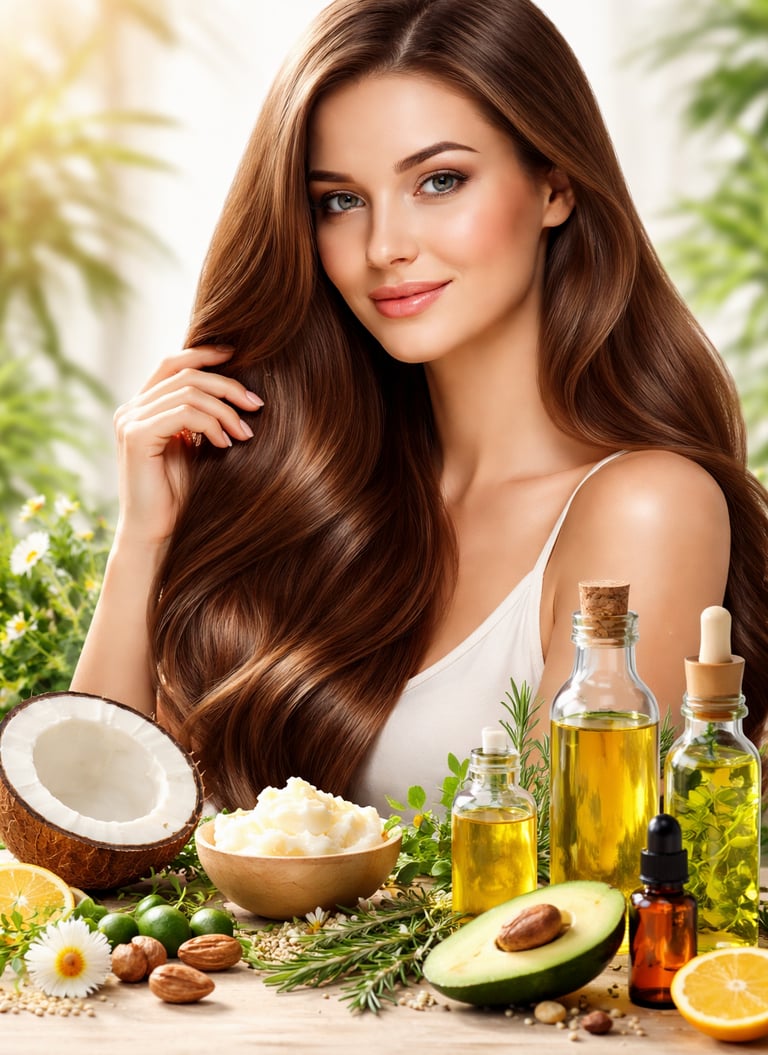
At the same time, hair health is closely connected to emotional well-being. Chronic stress can disrupt the hair growth cycle, leading to temporary hair loss or a decline in hair quality. For this reason, hair care is not only a physical process, but also one that involves mental and emotional balance.
In essence, healthy hair is not just the result of well-chosen products, but reflects how you take care of yourself, both physically and emotionally. It is a subtle yet powerful indicator of inner balance, and the attention you give to it can reveal a lot about your lifestyle and your relationship with yourself.
How healthy hair influences attractiveness
Hair plays an important role in how we are perceived by others, being one of the first visible elements that contribute to first impressions. Shiny, well-maintained, and voluminous hair conveys vitality, energy, and self-care. These signals are processed quickly at a subconscious level, and people tend to associate healthy hair with overall well-being and a balanced lifestyle.
From a psychological perspective, attractiveness is not determined only by physical features, but also by subtle cues that suggest health, stability, and confidence. Healthy hair becomes a symbol of these qualities. Natural shine, even texture, and a well-groomed appearance communicate inner balance, making a person appear more confident and present.
Attraction is also influenced by how hair complements personal expression. Well-maintained hair not only enhances physical appearance, but also contributes to how a person expresses their identity. Style, texture, and the way hair is worn can highlight features and convey different states, from naturalness and authenticity to refinement and control.
At the same time, healthy hair is perceived as an indicator of attention to detail. A person who takes care of their hair implicitly signals self-respect and awareness of how they present themselves. This self-care is attractive because it suggests responsibility, stability, and respect for one’s own body.
Another important aspect is the impact of hair on self-confidence. When hair looks good, it directly influences emotional state and how a person shows up in interactions with others. Confidence becomes more visible in body language, expressions, and communication, which significantly contributes to perceived attractiveness.
In essence, healthy hair is not just an aesthetic detail, but a signal of lifestyle, inner balance, and self-relationship. The attraction it creates comes from these subtle yet powerful cues that influence how we are perceived and how we connect with others.
How to properly care for your hair
Hair care should be simple but consistent, as results appear over time, not instantly. A proper routine does not necessarily involve complex products, but rather the right choices and consistency. Excessive washing can disrupt the scalp’s balance and stimulate sebum production, which is why it is recommended to wash the hair two to three times per week, depending on hair type and individual needs.
Choosing the right shampoo is essential and should be based on the scalp, not just the hair itself. A healthy scalp is the foundation of healthy hair. For example, an oily scalp requires different products compared to a dry or sensitive one. At the same time, conditioner should not be neglected, as it helps hydrate the lengths, reduce dryness, and prevent breakage.
Hair masks applied regularly, once or twice a week, contribute to hair regeneration and help maintain elasticity. They provide deeper hydration and can partially repair damage caused by external factors such as heat or pollution. Consistent use makes the difference between hair that looks good temporarily and hair that is truly healthy.
Protecting the hair is just as important as hydrating it. Frequent exposure to heat from styling tools such as straighteners, curling irons, or blow dryers can lead to long-term damage. For this reason, using a heat protection product is essential. Additionally, tying the hair too tightly or using harsh accessories can cause breakage and thinning.
Another important aspect is how you treat your hair daily. Brushing should be done gently, preferably with a brush suitable for your hair type, to avoid breakage. It is also recommended not to rub the hair aggressively with a towel after washing, but to gently pat it dry to reduce damage.
Regular trimming of the ends is essential for maintaining a healthy look. Although it does not directly influence hair growth, it prevents further damage and stops split ends from traveling up the hair shaft. This helps maintain a clean and well-groomed appearance.
Last but not least, nutrition and lifestyle play a major role in hair health. Without essential nutrients such as proteins, vitamins, and minerals, hair cannot be strong and resilient. At the same time, stress and fatigue can directly affect hair quality, which is why emotional balance is just as important as external care.
In essence, proper hair care is not about perfection, but about consistency. Small habits, repeated over time, are what lead to healthy, strong, and naturally beautiful hair.
The best oils for hair depending on hair type
Natural oils are one of the most effective ways to care for hair, as they provide hydration, protection, and support hair regeneration. However, their effectiveness depends greatly on choosing the right oil based on hair type and scalp needs. When used correctly, oils can significantly improve texture, shine, and strength.
For dry and damaged hair, richer oils are most suitable, as they provide deep hydration and help restore the hair structure. Coconut oil penetrates the hair shaft and reduces protein loss, argan oil adds shine and elasticity, and olive oil deeply nourishes and protects against external factors. These oils are especially beneficial for hair frequently exposed to heat, coloring, or chemical treatments.
Fine or low-volume hair requires lightweight oils that hydrate without weighing the hair down. Jojoba oil closely resembles the scalp’s natural sebum and helps balance it, while grape seed oil is very light and provides hydration without leaving a greasy feel. These oils are suitable for frequent use in small amounts.
In the case of oily hair, oils should be used with caution, as excessive application can worsen the issue. However, certain oils can help regulate sebum production. Tea tree oil has antibacterial properties and supports a clean scalp, while jojoba oil can help signal the scalp to produce less oil. Application should be done in small amounts, preferably before washing.
For hair prone to hair loss, certain oils can stimulate scalp circulation and support hair growth. Castor oil is known for its strengthening properties, while rosemary oil stimulates the roots and may help increase hair density. Scalp massage during application is essential, as it boosts circulation and enhances effectiveness.
Curly or frizzy hair benefits from richer oils that provide intense hydration and help define curls. Avocado oil deeply nourishes and improves elasticity, while shea oil or butter helps control frizz and maintain the natural shape of the hair. These oils are ideal for application on the lengths, especially on slightly damp hair.
It is important to note that oils should not be used excessively. The amount and method of application make the difference between hydrated hair and weighed-down hair. In general, applying oils once or twice a week is enough to see visible results.
In essence, choosing the right oil based on hair type can completely transform its appearance and health. There is no universal oil, only solutions adapted to each individual’s needs, and this adaptability is the key to truly healthy hair.
How to use hair oils correctly
Hair oils can be extremely effective when used properly, but the method of application makes the difference between visible results and hair that feels heavy or greasy. They can be applied both on the scalp, to stimulate growth and balance sebum production, and on the lengths, for hydration and protection.
Applying oil to the scalp is especially recommended for hair prone to hair loss or for dry scalp conditions. The oil should be distributed in small amounts and gently massaged for a few minutes to stimulate blood circulation. This massage helps activate the roots and improves nutrient absorption. It is important not to apply too much oil, as it can make washing more difficult and weigh down the scalp.
For hydrating the lengths, oils can be applied to dry or slightly damp hair, focusing on the ends, which are most prone to damage. This helps reduce dryness, prevent breakage, and maintain a smooth and shiny appearance. For very dry or damaged hair, the oil can be left on for a longer period for a more intense effect.
In general, oils should be left on for 30 minutes to a few hours, depending on the hair type and its needs. For deeper hydration, some people choose to leave them overnight, but this should be adjusted based on how well the hair responds. After application, the hair should be washed properly, sometimes requiring two washes to fully remove excess oil.
Frequency of use is also important. Using oils once or twice a week is enough to improve texture, shine, and strength without overloading the hair. More frequent use does not accelerate results and may have the opposite effect.
Another essential aspect is adapting both the oil and the application method to your hair type. Fine hair requires very small amounts and lightweight oils, while dry or curly hair can tolerate larger amounts and richer oils.
In essence, hair oils are not effective only because of their properties, but because of how they are integrated into a proper routine. Used consistently and adapted to your needs, they can significantly improve the health and appearance of your hair.
Healthy hair as a form of self-care
Healthy hair is not just the result of well-chosen products, but reflects how you take care of yourself as a whole. It is a visible indicator of the balance between body, mind, and lifestyle. The way your hair looks often says more than any care routine — it reflects your nutrition, your stress levels, and the attention you give to your own needs.
The attraction created by healthy hair does not come only from its aesthetic appearance, but from the subtle signals of vitality, energy, and stability it conveys. Well-maintained hair suggests inner balance, self-care, and a healthy relationship with your body. These signals are instinctively perceived by others and contribute to the overall image you project.
Hair care thus becomes more than an aesthetic ritual — it becomes a form of respect for yourself and conscious attention to your body. It is a process that involves not only products or routines, but also daily habits, emotional balance, and choices that support long-term health.
In essence, healthy hair is not just about how it looks, but about how you take care of yourself. It is a visible expression of the way you treat yourself, and this self-care is one of the most authentic forms of attractiveness.
This article is also available in Romanian https://www.ioanacomancoaching.com/ro/de-ce-este-important-parul-sanatos-si-cum-influenteaza-atractivitatea
Healthy hair is not just an aesthetic feature, but a visible indicator of overall health and how we take care of ourselves. It subconsciously signals balance, vitality, and confidence, and these qualities are immediately perceived by others. For this reason, hair care is not only about appearance, but also about the overall state of the body and the way we relate to ourselves.
Why healthy hair matters
The condition of the hair often reflects the overall state of the body, being one of the most visible indicators of internal health. When hair becomes fragile, dull, breaks easily, or falls excessively, these signs are not merely cosmetic, but may indicate prolonged stress, hormonal imbalances, or deficiencies in essential nutrients. For this reason, hair care should not be seen only as an external routine, but as part of a broader balance within the body.
Maintaining healthy hair starts from within. Nutrition plays a crucial role, as hair is largely made of proteins, and a lack of them directly affects strength and growth. At the same time, hydration influences elasticity and appearance, while an unbalanced lifestyle marked by stress or fatigue can accelerate hair damage. Therefore, healthy hair is, in reality, the result of a balanced lifestyle.
Another important aspect is the connection between hair and the hormonal system. Hormonal imbalances can influence both the growth rate and the density of the hair, and in many cases, excessive hair loss is the first sign that the body is going through an internal change. In this context, hair care also becomes a way to better observe and understand one’s own body.
Healthy hair does not only mean a pleasant appearance, but also optimal functioning of the body. Nutrients such as proteins, B-complex vitamins, iron, and zinc are essential for hair growth and regeneration. For example, iron deficiency can lead to hair thinning, while a lack of B vitamins affects texture and strength. Without these elements, even the best hair care products have limited effect, as they do not address the underlying cause.


Ioana Coman Coaching
Sessions available online. For inquiries or to book a session, contact me at: ioanacomancoaching@yahoo.com
Follow Ioana Coman Coaching on Instagram: @ioanacomancoaching https://www.instagram.com/ioanacomancoaching/
Ioana Coman Coaching — founded by Ioana Elena Coman