First Coaching Session – €30 (one-time offer)



After 40, the real risk isn’t age. It’s muscle loss.
SELF-CARE & WELLBEING
Ioana Coman
5/5/20263 min read
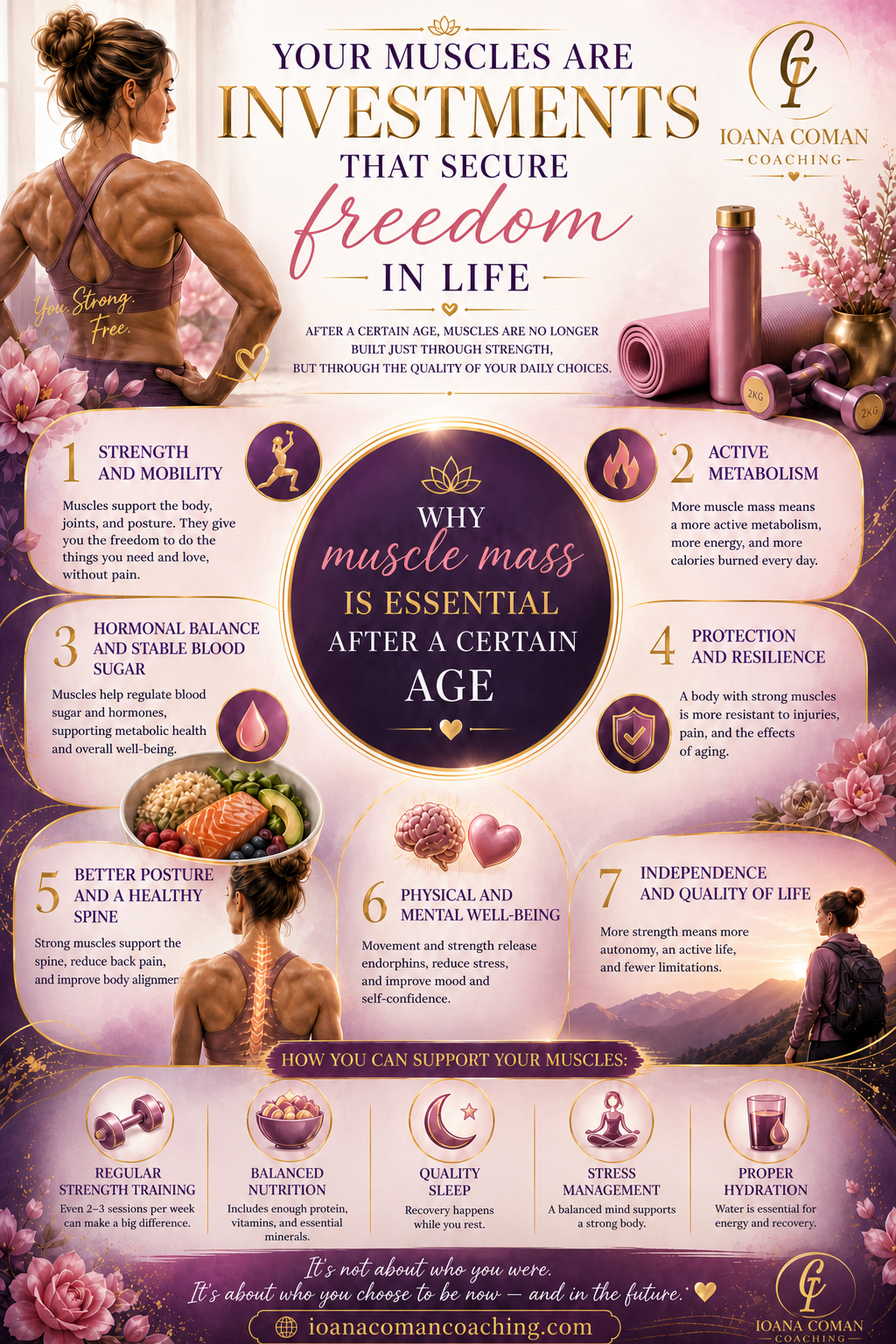
Why muscle mass becomes essential after a certain age
As we age, the body begins to change in subtle but important ways. One of the most significant processes is the gradual loss of muscle mass, also known as sarcopenia. This natural decline can begin as early as our 30s and becomes increasingly visible after 40, especially in the absence of regular physical activity and proper nutrition.
For this reason, maintaining muscle mass is no longer just about physical appearance. It becomes a fundamental aspect of overall health, longevity, and daily functionality. Understanding how muscle loss affects the body is essential for anyone looking to maintain balance, energy, and long-term wellbeing.
The role of muscle mass in metabolism, stability, and overall health
Muscle mass plays a crucial role in maintaining a healthy metabolism. The more muscle the body has, the more efficiently it uses energy, even at rest. This directly impacts weight management, blood sugar regulation, and overall metabolic health.
Beyond metabolism, muscles support joint stability, protect the spine, and contribute to proper posture. A strong muscular system reduces strain on the body and helps prevent chronic pain, especially in the back and joints.
Muscles are also deeply connected to hormonal balance and resilience to stress. A body with adequate muscle mass is not only stronger but also more adaptable, both physically and mentally.
What happens when muscle mass decreases
When muscle mass declines, the effects extend beyond physical appearance. Strength and mobility gradually decrease, making everyday activities more difficult. Simple movements such as walking, lifting, or maintaining balance can become more challenging over time.
A slower metabolism often follows, increasing the likelihood of weight gain and making it harder to maintain a healthy body composition. At the same time, energy levels drop, and fatigue becomes more frequent.
The risk of injury, joint pain, and even falls increases as the body loses stability and support. Over time, these changes can significantly affect independence and overall quality of life.
Benefits of maintaining muscle mass after 40
Maintaining muscle mass after 40 has a direct impact on both physical and mental wellbeing. A stronger body allows for more controlled and efficient movement, reducing the risk of injury and improving daily comfort.
Energy levels become more stable, and the body is better able to manage stress. Improved metabolic function supports balanced blood sugar levels and reduces the risk of lifestyle-related conditions.
In addition, posture improves, physical tension decreases, and the body feels more aligned and stable. This functional strength also contributes to confidence, creating a positive relationship between physical health and mental state.
Why muscle loss accelerates after 30–40
After the age of 30–40, the body naturally begins to lose muscle mass at a faster rate. Recovery processes slow down, and the effects of a sedentary lifestyle become more pronounced. Without intentional effort, this decline becomes progressive and increasingly difficult to reverse.
However, the body remains highly adaptable. With consistent physical activity and proper nutrition, it is possible not only to maintain muscle mass but also to rebuild strength and improve overall performance at any age.
How to maintain muscle mass naturally and effectively
Maintaining muscle mass does not require extreme measures, but it does require consistency. Regular strength training, including exercises using body weight, resistance bands, or weights, plays a key role in preserving muscle tissue and improving strength.
Nutrition is equally important. Adequate protein intake supports muscle repair and growth, while balanced meals help maintain energy and metabolic stability.
Sleep and stress management also contribute significantly to recovery and hormonal balance. When these elements are aligned, the body functions more efficiently and maintains its strength over time.
Muscle mass and long-term quality of life
Muscle mass is not just about aesthetics or performance. It is a core component of health that directly influences how the body functions on a daily basis.
After a certain age, maintaining muscle becomes a form of self-care and long-term investment in quality of life. A strong body supports independence, mobility, and overall wellbeing.
The key is not intensity, but consistency. By understanding the real needs of the body and supporting them over time, it is possible to maintain strength, balance, and vitality well beyond 40.


Ioana Coman Coaching
Sessions available online. For inquiries or to book a session, contact me at: ioanacomancoaching@yahoo.com
Follow Ioana Coman Coaching on Instagram: @ioanacomancoaching https://www.instagram.com/ioanacomancoaching/
Ioana Coman Coaching — founded by Ioana Elena Coman